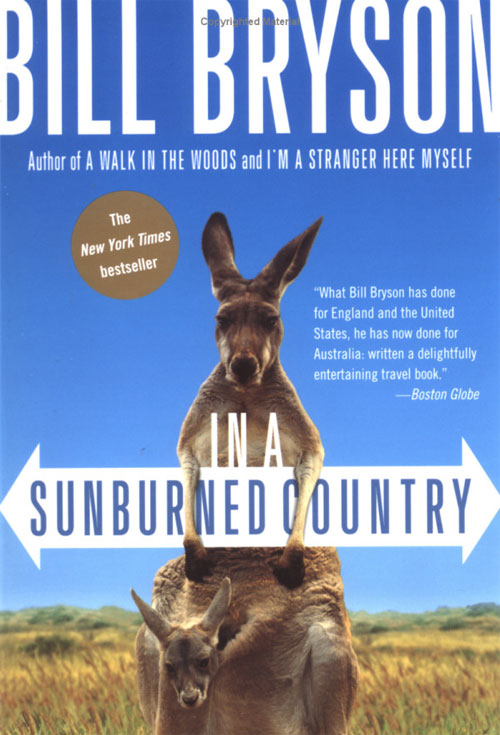
 This book gives you a real sense for what it is like going Down Under without even leaving your house. I read this on the way to Sydney--well not the whole thing in one sitting, but if you've ever wondered about the Aussies this book is for you.
Monday, February 16, 2009
In a Sunburned Country
This book gives you a real sense for what it is like going Down Under without even leaving your house. I read this on the way to Sydney--well not the whole thing in one sitting, but if you've ever wondered about the Aussies this book is for you.

To whoever wants to post
If you want to be able to post here, just email me with your gmail address, or whatever address you use to access blogger, and I'll add you.
Sunday, February 08, 2009
The Hunger Games by Suzanne Collins
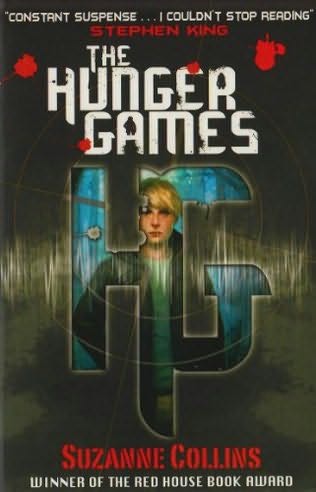
You must read this book. That's all there is to it.
It's science fiction, sort of. I'm going to very cautious compare it to the Twilight series, but it's not really the same at all. It's got the same sort of vibe: juvenile fiction, can't put it down but don't know why, the main character is a girl. But there are no vampires or a *real love story. (*There is a love story, but it is tangential to the plot. We don't have to hear about his marble chest and fruity breath every page for 400 pages.)
Tyler read it in a few days and I read it in one sitting when I was really sick last week.
Read this book, you won't be sorry.
Saturday, February 07, 2009
random review
I have officially read all of Jane Austen's novels (over a period of many years). I like them, but I have to be in the right mood to get into it. Pride and Prejudice was my favorite. I think it helped that I watched the movie first, the one with Keira Knightley. I wouldn't usually say that about a book made into a movie, but I think in this case it helps you get a feel for the setting with the costumes and the period music, etc. Persuasion was also good, and I liked the movie of that as well. Austin calls them 'bonnet' movies. I like that they stick really closely to the plot and the text of the books.
I randomly read a book called The King's Daughter by Sandra Worth, which I read about on curled up with a good book. It was a little more romance-novel-ish than I was expecting, so I wouldn't really recommend it, but it did give me a greater interest in the period. It's about Elizabeth of York who ends up marrying Henry Tudor and becoming the first Tudor queen. It is a novel, but "meticulously researched" so has good historical detail.
Also, the Fablehaven books are pretty good, by Brandon Mull. I read the first in the hospital while Austin and Andrew were in surgery. Jules had it with her. I just read the second and third in January. I think they age well. I just hope it doesn't go on and on like the Tennis Shoes among the Nephites series, where by the six and seventh books they end in the middle of the story, completely unresolved. How can you end a novel on a cliffhanger? That's annoying. I haven't heard if Fablehaven will end at a certain point, but the fourth book is coming out in March, for all you fantasy lovers (mostly just me, I think).
I started The Hunchback of Notre Dame but haven't been able to get into it yet. What else have y'all been reading? Let's hear it.
Sorry for no pics. You're smart, though, you can look it up if you really want to see the covers. =)
I randomly read a book called The King's Daughter by Sandra Worth, which I read about on curled up with a good book. It was a little more romance-novel-ish than I was expecting, so I wouldn't really recommend it, but it did give me a greater interest in the period. It's about Elizabeth of York who ends up marrying Henry Tudor and becoming the first Tudor queen. It is a novel, but "meticulously researched" so has good historical detail.
Also, the Fablehaven books are pretty good, by Brandon Mull. I read the first in the hospital while Austin and Andrew were in surgery. Jules had it with her. I just read the second and third in January. I think they age well. I just hope it doesn't go on and on like the Tennis Shoes among the Nephites series, where by the six and seventh books they end in the middle of the story, completely unresolved. How can you end a novel on a cliffhanger? That's annoying. I haven't heard if Fablehaven will end at a certain point, but the fourth book is coming out in March, for all you fantasy lovers (mostly just me, I think).
I started The Hunchback of Notre Dame but haven't been able to get into it yet. What else have y'all been reading? Let's hear it.
Sorry for no pics. You're smart, though, you can look it up if you really want to see the covers. =)
Tuesday, January 06, 2009
The Fountainhead - Read by Chad

This was my second time through The Fountainhead. Caitlin and I first read it together while on our honeymoon. Romantic, I know.
In The Fountainhead, Ayn Rand explains her theories of the glorification of man embodied in her main character, Howard Roark. According to Rand, true happiness can only be obtained by a strict adherence to one's purest desires. In other words, complete selfishness.
Howard Roark is an architect in the early 20th century who's genius could earn him a fortune if he could only forfeit his own desires to design buildings according to the ideas and desires of others. To do that, he would have to forgo his desires which he can not do. Instead, he lives a meager but happy life, designing the type of structures that satisfy his desires, regardless if the client(s) likes them or not. Some recognize his genius and support him. Other's recognize it, and try to extinguish it.
While I don't agree with all of Rand's ideas, there is something to be said for those who find happiness in doing that which they truly want to do, regardless if that thing brings them success (according to a worldly standard) or not. Happiness is success according to Rand. And one can never find happiness down someone else's path. That is, except for the Savior's path but I guess Rand had never heard about the Church.
In conclusion, this is one of my favorite books. I highly recommend it.
Monday, January 05, 2009
Blink by Malcolm Gladwell

I really liked this book. This book, and The Tipping Point both remind me of Freakonomics. The author has a way of coming at problems and questions sideways so you don't anticipate where he's going and then, bam! there's a connection that you never thought of before. Every chapter is insanely well researched, to the point where you think "how would you ever think to look up something like that?"
The book is about our ability to make decisions without thinking or considering options. How we can look at a situation and just 'know' something right away. A good example of this kind of thinking from the book goes something like this: A man and his father are in a car wreck. The father is killed. The man is rushed to the ER and the doctor sees him and shouts, "This is my son!" Who is the doctor? The doctor is the man's mother. You don't have to think about it, the answer just comes, bam. The book talks about how this kind of thought process affects every aspect of our life and the decisions we make. It's really interesting stuff.
Tuesday, December 23, 2008
Gideon the Cutpurse, by Linda Buckley Archer
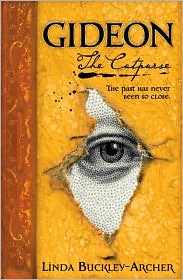
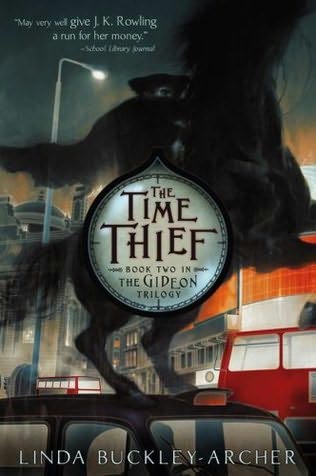
I grabbed this book from the juvenile fiction shelf, mostly because it had a fantasy sticker on the binding but also because I noticed its sequel sitting next to it, The Time Thief, which had an intriguing piece of promotion tagging the front cover. It said, "May very well give J.K. Rowling a run for her money." That's probably the best bit of promo they could have given a book like this. I might not have otherwise checked it out. Anyway, it's an adventure book that centers on two present day English adolescents (yes, they're 12) who accidentally land themselves in 1763. So historical fiction, if you will, as well as time travel adventure story. It's a trilogy, the third of which hasn't been published yet. Has lots of twists in the plot. Fun and fast paced. In a way it reminded me of the Peter and Starcatcher series. I really enjoyed both books. But I wouldn't go so far as to say it rivals Harry Potter. Oh, and apparently the title of the first book was later changed or maybe published differently in the UK and in the states, so depending on your library the first book can also be found under The Time Travelers (I like the original title better, personally).
I read The Lace Reader and Snow Flower and the Secret Fan, which Amanda posted about. They were both really good. The Lace Reader was a little scary/exciting with some unexpected twists that make you want to read it all over again with your new, added perspective. I'm currently about 3/4 of the way through Guernsey and the Literary and Potatoe Peel Pie Society. I LOVE it. If you haven't checked it out yet, go do it. Right now. One of the best books I've read in a long time. I also read Mansfield Park by Jane Austen not too long ago. I really enjoyed it. It's a quiet, contemplative sort of book. Next up is Pride and Prejudice.
Sunday, December 21, 2008
"Frankenstein; or, The Modern Prometheus" By Mary Shelley- Read by Chad

Dr. Frankenstein, with the hope of advancing science sets out to reanimate that which has pasted away. At the moment of success, religious and ethical doubts flood his thoughts to the point where he runs in terror.
The creature, finding himself alone in a world of fear and hate towards him, decides to track down his creator with the hope that he will create a female to accompany him through his new life. Frankenstein refuses to repeat the evil that he'd already committed. The creature cursed with solitude sets out to curse Frankenstein with the same fate.
The book makes a few parallels to the creation of Adam and Eve however in this case, after the creation of man, the creator curses the man and leaves him to fend for himself with out help, and with out a companion. Thus, in a sense, making the man or "the creature" drunk with hate and scorn towards his creator.
This book is terribly sad for both the creature and Frankenstein.
For a book that was written nearly 200 years ago, it is extremely relevant to the ethics of science today.
Don't look through the window at night in a lightening storm, it's a guarantee that the creature will be on the other side smiling at you. Dun, Dun, Duunnn....
Saturday, December 20, 2008
What I've been reading...by Chad
I had to break into Caitlin's account to post here since apparently, the only dude that can post is Austin.
So anyway,
 Edward- "I love you, but I want to drink your blood"
Bella- "I love you, I'm not scard of you. Let's get it on".
If Jasper is so jumpy around blood (i.e. He nearly kills Bella when she gets a paper cut (wait, was that in this book?)) then what the heck is he doing in school? What, no one's got a paper cuts in school? I think I saw someone lose a finger once in shop.

Edward- "I'm in this book. JK".
Jacob- "Hi Bella, I'm not so secretly in love you and you hanging around all the time is sort of leading me on. P.S. I'm a werewolf."
Bella- "Thanks for helping me get over Edward. Oh, you love me? I love you too. JK. I'll be here tomorrow so you can hold my hand some more.
 Bella- "Edward, make me a vampire"
Edward- "Alright, JK"

I thought the ending was anti-climatic. If the volturi were mind attacking them, I think it would at least have been cool if they did some mind attacking back. Maybe had the Amazon take out their vision or something.

My second time through this one. There was a bunch of stuff I missed from the first time. For examle, Bokonan predicted that his boat taken from the "Lady's Slipper" would sail again at the end of the world. It was made into the bed that Papa was in when he fell into the ocean.
Now I want to try a little Boko Maru with Caitlin. This book gave me a nightmare about Ice Nine. I haven't verified this, but I wasn't aware the cat's cradle is one of the oldest recorded games. I like this book.

My first time with Robinson Crusoe. I was surprised at how spritual it was. He spends 28 years on the island, 26 or so by himself. Over which time, he comes to appreciate the Lord's hand in all he has and all he is able to learn and accomplish. "If savage man come, they eat me, you get away". This is also where "My man Friday" comes from. I like Friday. I like the scene where Friday fights the bear.
So anyway,
 Edward- "I love you, but I want to drink your blood"
Bella- "I love you, I'm not scard of you. Let's get it on".
If Jasper is so jumpy around blood (i.e. He nearly kills Bella when she gets a paper cut (wait, was that in this book?)) then what the heck is he doing in school? What, no one's got a paper cuts in school? I think I saw someone lose a finger once in shop.

Edward- "I'm in this book. JK".
Jacob- "Hi Bella, I'm not so secretly in love you and you hanging around all the time is sort of leading me on. P.S. I'm a werewolf."
Bella- "Thanks for helping me get over Edward. Oh, you love me? I love you too. JK. I'll be here tomorrow so you can hold my hand some more.
 Bella- "Edward, make me a vampire"
Edward- "Alright, JK"
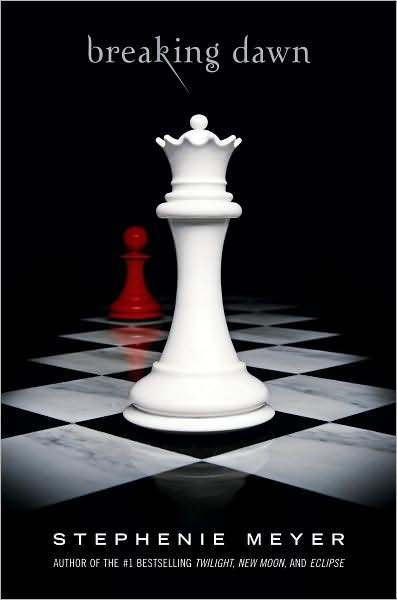
I thought the ending was anti-climatic. If the volturi were mind attacking them, I think it would at least have been cool if they did some mind attacking back. Maybe had the Amazon take out their vision or something.
My second time through this one. There was a bunch of stuff I missed from the first time. For examle, Bokonan predicted that his boat taken from the "Lady's Slipper" would sail again at the end of the world. It was made into the bed that Papa was in when he fell into the ocean.
Now I want to try a little Boko Maru with Caitlin. This book gave me a nightmare about Ice Nine. I haven't verified this, but I wasn't aware the cat's cradle is one of the oldest recorded games. I like this book.

My first time with Robinson Crusoe. I was surprised at how spritual it was. He spends 28 years on the island, 26 or so by himself. Over which time, he comes to appreciate the Lord's hand in all he has and all he is able to learn and accomplish. "If savage man come, they eat me, you get away". This is also where "My man Friday" comes from. I like Friday. I like the scene where Friday fights the bear.
Wednesday, December 10, 2008
The Know-It-All
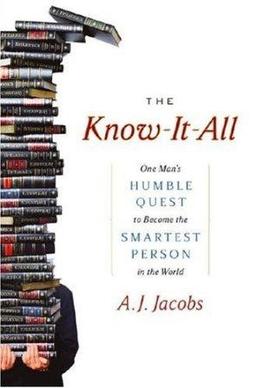
In my Real Simple magazine, they had some authors write letters to Santa as their childhood selves. The one by A.J. Jacobs was particularly funny, so I thought I'd get his book from the library. Hilarious. He decides he's going to read the Encyclopaedia Britanica from A to Z. The book not only goes over the odd things that he's learned (like how Rene Descartes had a thing for cross-eyed women, or this bit about Pythagoras that I liked,
According to the encyclopedia, members of the brotherhood , [which Pythagoras founded] were told to "refrain from speaking about the holy, wear white clothes, observe sexual purity, not touch beans, and so forth." That's what it said: do not touch beans.... It didn't say whether that meant all beans, or just certain beans like kidney or pinto. Just those four words.)
but he talks about how he tries to fit all of these new factoids into his daily conversations. This is something I'm always trying to do, so I felt like we would be two people of the same heart. He chronicles his quest to go on Jeopardy, join Mensa, and use his new found trivia knowledge to compete in the crossword puzzle tournament hosted by Will Shortz.
It was hilarious. The only down side was maybe 8-10 incidences of foul language, maybe 12. I normally wouldn't stand for that, but I was hooked.
Thursday, November 13, 2008
Lace Reader

I just finished Lace Reader by Brunonia Barry. I picked it because of the rave review it received on CurledUp.com. First off, I have a confession: this book normally wouldn't have passed my profanity filter, which sort of works on a point system. The problem with this book is that there was no swearing until more than half way, and by that time I was hooked and couldn't stop. Just in the interest of disclosure, I would guess that throughout the last half of the book, there were probably 20 incidences of the "f-word" but not much else. No sex or violence, and some mild illicit drug use.
On to the story. It revolves around a woman named Towner Whitney who fights equally with her own mental illness and (possibly caused by) her family. All the Whitney women are Lace Readers with a streak of genuine psychic power. Lace reading invloves holding a piece of lace to the face of another and seeing images in/through the lace and telling the future. Towner battles with past demons and tries to find what is real and what is hallucination.
You may be wondering about the picture at the top. It is a lace maker's pillow. A portion of the book revolves around one of these pillows and while Ms. Barry did as good a job as a person could have done describing it, I was still way confused at what it actually looked like. Mostly because those wooden peg things are called bobbins. She never says what the bobbins look like, so I was trying to picture bobbins like the little things that go in your sewing machine, and it just wansn't working out. So, if you read it, you won't be nearly as confused as I was.
I wouldn't go so far as the previously cited reviewer as to say that this is one of the best books I've ever read, but I did enjoy it. A lot. Once I got about 100 pages into it, I read it straight through.
My only complaint, aside from the f-bombs, is the ending. It has a twist ending that I totally didn't see coming. Not the same as, but akin to, The Sixth Sense where the whole perspective of the book changes with this one piece of information. The only thing is, I felt, is that there were lots of unanswered questions connected to this one last twist that I would have felt more peaceful about if they were addressed. As it is, I'm wondering how it all was supposed to work in that one scene.... or what about... or who was she talking to if....
Wednesday, November 05, 2008
My Antonia

I saw a while back that Caitlin had My Antonia by Willa Cather listed under her "currently reading" section on her blog. I had never read it (really I hadn't heard of it), so I got it from the library. I had a few other things I was reading at the time, so I had to renew this book 3 times before I got through it.
For those who, like me, haven't read it, it was published in 1918 and it chronicles the lives of settlers on the Nebraska prairie. The narrator is Jim Burden, a boy sent to live with his farmer grandparents. His closest friend is Antonia Shimerda, an immigrant from Bohemia who lives in the next farm over with her family. The Shimerdas have it rough and live in a sodhouse like the one pictured above.
The book, overall was worthwhile, but like other great pieces of literature of the early century, was a bit dreary to get through. (We all remember the turtle chapter from The Grapes of Wrath.) It seemed to me that looking back and reminiscing was a large thematic element. As Jim gets older, he is always thinking about his early years. The Shimerdas are always talking about 'the old country.' Looking back is fine, but it seemed that no one was satisfied with the present. The only thing that came close was when Jim was going to the dances in Black Hawk, and having fun dancing with all the girls, until his grandmother felt he was giving the family a bad name, so he had to quit going.
When Jim does try to go back to his hometown after being away for so long, he doesn't look on the changes he finds there with any sort of satisfaction; just a sad longing for the way things used to be.
I agree with the sentiment that 'you can never go home again,' and while that's a sad truth, I can still find pleasure in the present, and even excitement about the future. Maybe that's what Antonia was trying to do when she was talking about how much she cared for her orchard. She speaks about how she cared for the trees and woke up in the middle of the night to go water them. What are young cherry trees if not a promise of a better future (one with cherries in it)? Maybe this pleasure in the present is what Jim was trying to do when he was taking his mental snapshot of all of Antonia's children coming out of the fruit cellar.
At any rate, I'm glad that I was born where and when I was if only that I didn't have to wrangle cattle all day then hunker down in the back room that night and give birth. What a life, eh?
Sunday, September 21, 2008
The Cronicles of Prydain
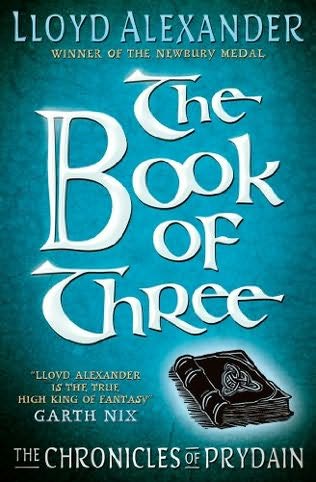
I tried reading these books when I was young but I think I started in the middle of the series and it was just too hard for me to get into them. Chantel and I have read all five and I thought they were awesome. I gave my office mates and others who caught me reading them the line, "well, I have to read them to make sure they're all right for my 6½ year old son." They are not too dark or too violent, check. Lots of action to get Owen's attention, check. Almost no romance whatsoever—the heroine is somewhat of a tomboy—thus Owen, a member in good standing of the “no-kissing-club” will not revolt, check.
I plan on owning them someday soon.
Thursday, September 04, 2008
The Guernsey Literary and Potato Peel Pie Society

My friend Vivian is responsible for so many fabulous things in my life: my love of ultimate frisbee, chocolate milk in a frosty mug, my first taste of Jack Johnson, and my introduction to a movie called Cold Comfort Farm. I love this film. It is very character driven with very little actual plot, but by the end of the movie, I felt like I knew and cared about all the people in it. Not to spoil what plot there is, but I was really happy for all of them that it had a happy ending, genuinely happy for them.
This book is like that.
The book uses an epistolary style to tell the story of the German Occupation of the channel islands (as in the English Channel). At the end, you come out knowing so much more than what it was like for the people of Guernsey Island during the war. You've made friends with all the people there. On the back cover, Elizabeth Gilbert, autor of Eat, Pray, Love (a book which I hear is fabulous and I started to read, but I can't recommend on account of it didn't pass my profanity filter) gives a review. She states: "... I kept forgetting this was a work of fiction populated with characters so utterly wonderful that I kept forgetting they weren't my actual friends and neighbors."
I loved this book so much, I finished it in a very unproductive day and a half, if productivity is counted as doing things other than reading like caring for my child and cooking/cleaning.
Read it, you'll love it.
Sunday, August 17, 2008
Book of a Thousand Days
Why can't I post a picture of a book... help me.... I'm so retarded.
I just read Shannon Hales's Book of a Thousand Days. I really liked Goose Girl by the same author. Both books are retellings of Grimm fairy tales. They are harowing and romantic. It was easy reading... I finished it in less than a day. (OK, not my most productive day)
I just read Shannon Hales's Book of a Thousand Days. I really liked Goose Girl by the same author. Both books are retellings of Grimm fairy tales. They are harowing and romantic. It was easy reading... I finished it in less than a day. (OK, not my most productive day)
Monday, July 07, 2008
Snow Flower and the Secret Fan
 Mom read this book in her book club and every time I talked to her, she asked me if I had read it. She described the plot, and from what I could tell, it sounded really depressing. Her description, which is fairly accurate, went something like this: It's the story of two girls in pre-communist China. And they communicate by writing secret messages back and forth on a fan. The book tells the story of their lives including all about how they have their feet bound and are married off to strangers.
 I wasn't all that jazzed to read a depressing story, so after she loaned it to me, it sat on my shelf for a while. When I got around to reading it, I found it very compelling. To learn about a culture so different from my own from an insider's perspective, without judgment. Not even A Thousand Splendid Suns really did that (although I liked that book too).
Anyway, the book is a bit depressing, but at the same time, it's fascinating and heartwarming.
Monday, February 04, 2008
The Sisters Grimm
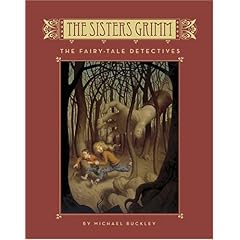
I just finished book 4 of the Sisters Grimm series. Apparently, every female of my family that lives in the borders of Orange County has already read them, and kept them a secret. So, this post if for anyone else who's out of the loop, like me.
The books center around Sabrina and Daphne Grimm, great-great-....-great-granddaughters of the famous Brothers Grimm. In the books, the Brothers Grimm didn't invent the fairy tales, they "documented" them... as in the characters are real. Now, centuries later the immortal Everafters, as they call themselves, cause trouble and it's up to the Grimms to solve the mysteries and keep the peace.
The books are written for a young audience, maybe 7-14 years old, but they're cute and you can read one in about 3 hours. There are five currently published with the 6th due out in April.
Tuesday, December 18, 2007
Little Women, Warning: SPOILERS
I have to confess that I cheated. I was reading Little Women and I wanted to be directed so I could look for things to talk about later, so I read a list of reading group questions supplied by the internet and I got all in a huff. I had only read through the first half, so I knew the characters well, and had a good idea of where I wanted the story to go. The questions not only revealed to me that Beth was going to die, but the Jo was not going to marry Laurrie. I was outraged. I almost made up my mind that I wasn’t going to like the book. But after reading it, I really did like it. Here’s some of the questions, and I’ll write what I think about them, and anyone who’s read it can respond.
Do you find it surprising that once Laurie is rejected by Jo, he falls in love with Amy? Do you feel his characterization is complete and he is acting within the "norm" of the personality Alcott has created for him, or does Alcott simply dispose of him once our heroine rejects him?
I don’t find it surprising at all. Like Jo says, she’s like the wind while Amy is like the sun and while a romance between Jo and Laurie would have been more interesting, or more fun, it wouldn’t have been more work to keep it happy. As far as the “norm” of the personality, I think it is out of the norm of his character, and this is what I think the book is about to some degree: that you can choose to learn from life, be it good or bad. Laurie had been a gadabout his whole life and had made an effort to learn from the good (i.e. trying to improve himself to win Jo), but when the Jo refused him, he was resigned to be unhappy. Amy showed him that you move forward no matter what.
As far as the shake-up goes, in general I think Alcott wanted to show that you don’t have to settle for so-so love. You don’t have to be married unless there is the potential for both parties to be ‘Julie-Andrews-spinning-on-a-mountain-top happy’.
The last two chapters find Jo setting aside her budding literary career to run a school with her husband. Why do you think Alcott made her strongest feminine figure sacrifice her own life plans for her husband's?
Boo to this whole question. It makes me irritated that people have forgotten what Alcott was trying to say in the last two chapters. That someone could read that and think only of the worldly glory that Jo was giving up with her writing and not see the joy that she invited into her life by surrounding herself with family and children is truly lamentable. Jo’s writing never really made her supremely happy because she was just ‘talented’ and not a genius, and thus could never create that wonderful masterpiece she dreamed of in her castle in the sky. But with getting married and opening a school, she realized the most wonderfully feminine part of herself and was really happy. And, as a point of order, the idea to open the school was Jo’s in the first place, not Mr. Baer’s.
The other questions were mostly dumb and obvious, but I just wanted to say that I really agree with the lessons taught by Marmee to her daughters. I especially like the ones imparted to Meg about making the home pleasant for her family and not letting her children eclipse her husband. I didn’t mark the page, but it really rang true to me when Marmee says something like, “you are the sunshine of your home.” As women, we have the opportunity to be very literally the glue that holds our home together. I know for me, I get bogged down in the every day minutiae of running a home (and going to school) like making sure that we have milk in the refrigerator and singing Twinkle, Twinkle Little Star for the millionth time in a row. But with the book, Alcott shows us that life is hard and housework is very real (I know I don’t sew one-tenth the amount that the March girls did) but like the last page of the book, when Marmee gathers her family around her, we too will have a reward so delicious that it can make sweet the bitter and everything will be more than worth it.
Do you find it surprising that once Laurie is rejected by Jo, he falls in love with Amy? Do you feel his characterization is complete and he is acting within the "norm" of the personality Alcott has created for him, or does Alcott simply dispose of him once our heroine rejects him?
I don’t find it surprising at all. Like Jo says, she’s like the wind while Amy is like the sun and while a romance between Jo and Laurie would have been more interesting, or more fun, it wouldn’t have been more work to keep it happy. As far as the “norm” of the personality, I think it is out of the norm of his character, and this is what I think the book is about to some degree: that you can choose to learn from life, be it good or bad. Laurie had been a gadabout his whole life and had made an effort to learn from the good (i.e. trying to improve himself to win Jo), but when the Jo refused him, he was resigned to be unhappy. Amy showed him that you move forward no matter what.
As far as the shake-up goes, in general I think Alcott wanted to show that you don’t have to settle for so-so love. You don’t have to be married unless there is the potential for both parties to be ‘Julie-Andrews-spinning-on-a-mountain-top happy’.
The last two chapters find Jo setting aside her budding literary career to run a school with her husband. Why do you think Alcott made her strongest feminine figure sacrifice her own life plans for her husband's?
Boo to this whole question. It makes me irritated that people have forgotten what Alcott was trying to say in the last two chapters. That someone could read that and think only of the worldly glory that Jo was giving up with her writing and not see the joy that she invited into her life by surrounding herself with family and children is truly lamentable. Jo’s writing never really made her supremely happy because she was just ‘talented’ and not a genius, and thus could never create that wonderful masterpiece she dreamed of in her castle in the sky. But with getting married and opening a school, she realized the most wonderfully feminine part of herself and was really happy. And, as a point of order, the idea to open the school was Jo’s in the first place, not Mr. Baer’s.
The other questions were mostly dumb and obvious, but I just wanted to say that I really agree with the lessons taught by Marmee to her daughters. I especially like the ones imparted to Meg about making the home pleasant for her family and not letting her children eclipse her husband. I didn’t mark the page, but it really rang true to me when Marmee says something like, “you are the sunshine of your home.” As women, we have the opportunity to be very literally the glue that holds our home together. I know for me, I get bogged down in the every day minutiae of running a home (and going to school) like making sure that we have milk in the refrigerator and singing Twinkle, Twinkle Little Star for the millionth time in a row. But with the book, Alcott shows us that life is hard and housework is very real (I know I don’t sew one-tenth the amount that the March girls did) but like the last page of the book, when Marmee gathers her family around her, we too will have a reward so delicious that it can make sweet the bitter and everything will be more than worth it.
Monday, December 17, 2007
A sipid story of requited love
Mom sent this to me awhile ago, and I was thinking about it today. I thought I'd reproduce it here so anyone who is interested can have a good laugh.
How I Met my Wife by Jack Winter
It had been a rough day, so when I walked into the party I was very chalant, despite my efforts to appear gruntled and consolate.
I was furling my wieldy umbrella for the coat check when I saw her standing alone in a corner. She was a descript person, a woman in a state of total array. Her hair was kempt, her clothing shevelled, and she moved in a gainly way. I wanted desperately to meet her, but I knew I'd have to make bones about it since I was travelling cognito. Beknownst to me, the hostess, whom I could see both hide and hair of, was very proper, so it would be skin off my nose if anything bad happened And even though I had only swerving loyalty to her, my manners couldn't be peccable. Only toward and heard-of behavior would do.
Fortunately, the embarrassment that my maculate appearance might cause was evitable. There were two ways about it, but the chances that someone as flappable as I would be ept enough to become persona grata or a sung hero were slim. I was, after all, something to sneeze at, someone you could easily hold a candle to, someone who usually aroused bridled passion. So I decided not to risk it. But then, all at once, for some apparent reason, she looked in my direction and smiled in a way that I could make heads and tails of.
I was plussed. It was concerting to see that she was communicado, and it nerved me that she was interested in a pareil like me, sight seen. Normally, I had a domitable spirit, but, being corrigible, I felt capacitated -- as if this were something I was great shakes at -- and forgot that I had succeeded in situations like this only a told number of times. So, after a terminable delay, I acted with mitigated gall and made my way through the ruly crowd with strong givings.
Nevertheless, since this was all new hat to me and I had no time to prepare a promptu speech, I was petuous. Wanting to make only called-for remarks, I started talking about the hors d'oeuvres, trying to abuse her of the notion that I was sipid, and perhaps even bunk a few myths about myself. She responded well, and I was mayed that she considered me a savoury character who was up to some good. She told me who she was. "What a perfect nomer," I said, advertently. The conversation became more and more choate, and we spoke at length to much avail. But I was defatigable, so I had to leave at a godly hour. I asked if she wanted to come with me. To my delight, she was committal. We left the party together and have been together ever since. I have given her my love, and she has requited it.
Subscribe to:
Posts (Atom)